08 março, 2012

Childless by Choice

NEW YORK: While considerable media attention has focused on the world’s population reaching the milestone of 7 billion, another demographic phenomenon receives little notice: the rise in number of people who choose not to have children. Against a birthrate of less than two children per woman in nearly all Western countries and a growing number of developing countries – a rate that assures a decline in population – rising voluntary childlessness will have consequences for government programs for the aged, undesirable implications for the elderly and other repercussions, including smaller cohorts of children, increased population aging and demographic imbalances among educational groups.

Fonte: Yale Global, 02/03/2012 (Via José Eustáquio Diniz Alves)


.
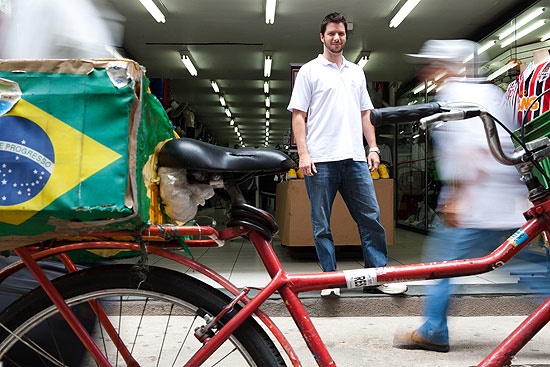
De volta ao país, brasileiros sofrem 'síndrome do regresso'

A crise dos países desenvolvidos está levando muitos brasileiros a fazerem as malas de volta para casa. Segundo o Itamaraty, 20% dos que moravam nos EUA e um quarto dos que moravam no Japão já retornaram desde o começo da recessão, em 2008.

"Foi um choque voltar ao interior", conta gerente de salão de beleza
Nostalgia e decepção com o país levam à depressão do regresso

O relatório de 2011 sobre a população expatriada sai no fim deste mês, e a taxa de retorno deve ser ainda maior. Há tanta gente comprando a passagem de volta e tanta dificuldade de reintegração ao mercado de trabalho brasileiro que o Itamaraty lançou o "Guia de Retorno ao Brasil", distribuído nas embaixadas.

Fonte: Folha de São Paulo, 06/03/2012 (Sugestão de Leonardo Freire de Mello, via Facebook)


.

06 março, 2012

Inovação e divulgação de projetos em jornais são novos critérios de avaliação da produção científica

O Conselho Nacional de Desenvolvimento Científico e Tecnológico (CNPq) vai acrescentar, na plataforma eletrônica Lattes, que traz currículos e atividades de 1,8 milhão de pesquisadores de todo o País, duas novas abas para divulgação pública. Em uma delas, os cientistas brasileiros informarão sobre a inovação de seus projetos e pesquisas; e na outra, deverão descrever iniciativas de divulgação e de educação científica.

Com a mudança, cientistas de todos os campos de investigação deverão descrever, na Plataforma Lattes, dados sobre a organização de feira de ciências, promoção de palestras em escolas, artigos e entrevistas concedidas à imprensa - além das informações básicas como dados pessoais, formação acadêmica, atuação profissional, publicações, linhas e projetos de pesquisa, áreas de atuação e domínio de idioma estrangeiros. A intenção do CNPq é aumentar o conhecimento da sociedade sobre as atividades científicas que ocorrem no País.

Fonte: Jornal da Ciência (SBPC), 06/03/2012


.

05 março, 2012

Japan’s Demographic Doom

Like many western nations, Japan is facing a demographic nightmare that portends a doomsday scenario for its future. As the Japanese live longer and the birth rate keeps falling, the country won't be able to meet the health care needs of a rapidly aging population as the workforce continues to shrink.

International Business Times spokes to an expert on demographic issues to discuss Japan’s dilemma.

Peter H. Liotta PhD is the author of "The Real Population Bomb: Megacities, Global Security & the Map of the Future," which has just been published. He is also Professor of Humanities at Salve Regina University in Newport, Rhode Island.

Fonte: International Business Times, 02/03/2012


.

Bad News for Boomers: Demographic trends will depress portfolio returns, this researcher warns

This very year, for the first time in U.S. history, the population of senior citizens rises faster than the working-age population. Less than 10 years ago, when the baby boomers' kids were coming into the labor force and the very skimpy roster of Depression babies was retiring, we had 10 new additions to the working-age cadre for each one new senior citizen.


Fonte: The Wall Street Journal, 04/03/2012


[Veja a matéria completa]


.

Poverty, inequality and redistribution

Governments can reduce poverty and inequality through taxes and cash transfers. Successful programmes such as Progresa-Oportunidades in Mexico and Bolsa Família in Brazil have helped reduce poverty and inequality in the last couple of decades, but compared with rich countries, Latin American countries still fall short. According to a newreport by the OECD, a club of mostly rich countries, Chile is the group's most unequal member. It also finished third from the bottom, ahead only of Mexico and Israel, in relative poverty, measured by the share of the population earning less than half the median income. (Brazil fares even worse in both categories, but is not part of the OECD). Government spending on health, education and social policies is low, around 16% of GDP; the OECD average is around 27%. While the government has introduced Ingreso Ético Familiar, the new cash transfer programme only targets the extreme poor. More efficient and progressive taxes would raise revenues and reduce inequality. Tax evasion by corporations and individuals alone is estimated to cost the government some 2.5% of GDP. Chile’s economy grew by 6.6% last year, but will slow to around 4% this year. Better job opportunities and higher quality education are needed to improve labour productivity and boost growth.

Fonte: The Economist, 17/01/2012


.

02 março, 2012

Últimos dias para submissão de trabalhos no V Encontro da ALAP


La Asociación Latinoamericana de Población (ALAP) convoca a la presentación de trabajos en el V Congreso de ALAP, a celebrarse en la ciudad de Montevideo del 23 al 26 de octubre de 2012, con el tema central: Las transiciones en América Latina y el Caribe. Cambios demográficos y desafíos sociales presentes y futuros.  El registro de trabajos se realizará exclusivamente en el sitio web de ALAP www.alapop.org


Fechas importantes:


10 de enero 2012
Apertura de la página web de ALAP para la inscripción del resumen corto
15 de marzo 2012
Fecha límite para la recepción de resúmenes cortos
11 de mayo 2012
Fecha límite para la recepción de trabajos completos
6 de julio 2012
Notificación sobre la aceptación de trabajos para ser presentados en sesiones regulares o en sesión de posters
24 de agosto 2012
Fecha límite para la recepción de la versión final del trabajo y confirmación de las personas aceptadas sobre su participación en el congreso

Skilled migrants to lose right to settle in UK

More than 40,000 skilled migrants a year are to lose their right to work beyond five years in Britain, in a move towards creating a temporary "guestworker" migrant labour force in the UK.

The home secretary, Theresa May, will tell MPs on Wednesday that she is breaking the link between migration and settlement for the first time, by taking away the right to remain in Britain for more than five years from any migrant worker earning less than £35,000 a year.

The announcement comes as university vice-chancellors warned ministers that their policy of curbing the number of overseas students is at odds with attempts to boost economic growth. The action group Universities UK said it was wrong to classify students as migrants when 79% of them go home after five years and they should be removed from the politically sensitive net migration figures.

Fonte: The Guardian, 29/02/2012


.

Care for older women: 'I've got no one left to help me. And I'm scared'

Mary was told recently that she had outlived her time. She agrees. Living alone in a remote area of Cornwall, the deaf and partially blind 88-year-old has attended the funerals of all her friends and most of her family. Her only child, a son, lives nearly three hours' drive away and is rarely able to visit.

"I'm old and I'm dreadfully vulnerable," she said. "I can't see and I can't hear, so it's not safe for me to go outside on my own. But inside my flat, I can't listen to the radio and I can't see the TV. I struggle to read with magnifiers. I've got no one left to help and support me. I'm lonely and I'm isolated. And I'm scared about the future."

Mary is one of the many thousands of vulnerable older woman in England today living out their days with little or no help from social services. Her story epitomises the impetus behind a campaign to overhaul the social care system in the runup to the government's publication of a funding white paper this spring.

Fonte: The Guardian, 29/02/2012


.

Mais pessoas se casam pela segunda vez em São Paulo

Casar está em alta em São Paulo. Mesmo com as uniões consensuais abocanhando espaço entre os casais, os paulistanos não arredam o pé de formalizar o vínculo: de 2000 para 2010, aumentaram em 41% os registros de casamento civil na capital, segundo o IBGE (Fundação Instituto Brasileiro de Geografia e Estatística).

Mas cada vez mais são divorciados e viúvos que trocam as alianças. Se em 2003 a união de solteiros somava na cidade 84,5% do total, em 2010 elas caíram para 79,8%, diante de uma fatia de 20,1% de noivos que já passaram das primeiras núpcias.

Fonte: Folha de São Paulo, 26/02/2012


.